
Dance Culture Studios Fees Explained: What Parents Pay For and What Their Investment Includes

Understanding dance fees, training options, competition costs and the real investment involved in developing a dancer.
Choosing a dance studio for your child is about more than finding a convenient class at an affordable price. It is about deciding what kind of experience you want them to have, what you hope they will learn and how much time, commitment and money your family is prepared to invest.
At Dance Culture Studios, we believe that people become good at something through commitment, dedication and focused effort, supported by sound guidance and effective training. Talent is valuable, but it is only one part of the equation. What a dancer does with that talent matters just as much.
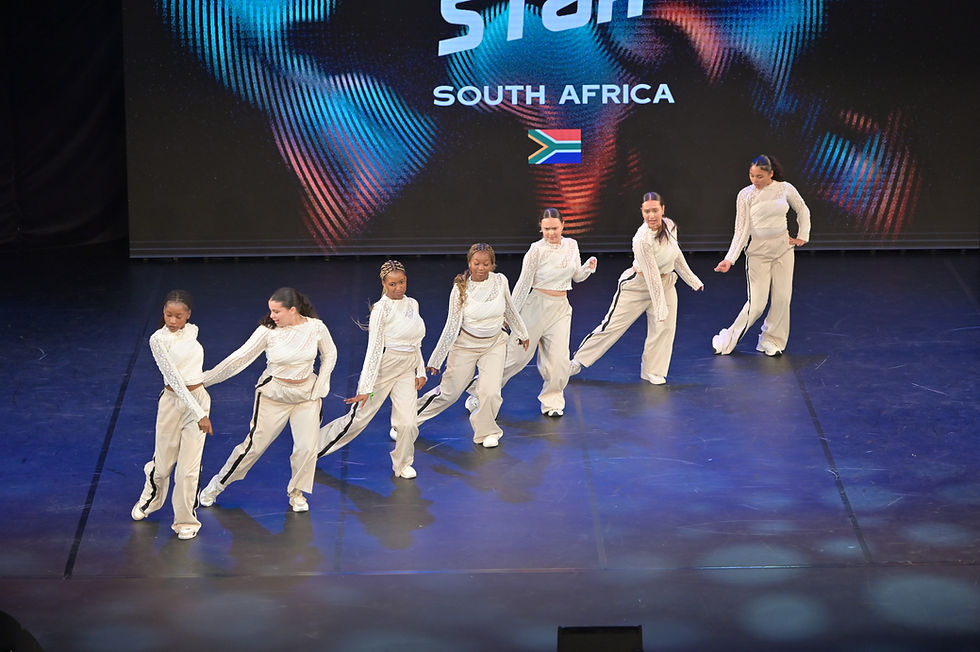
We also recognise that dance is an investment. For some families, it is a recreational activity. For others, it becomes a serious commitment involving competitive training, performances, specialist instruction and opportunities to represent their studio, province or country.
These different ambitions come with different costs.
Our intention with this article is to explain how our fees work, what they include, what additional expenses families should anticipate and how to assess the value of the training being offered.
We want parents to make informed decisions before committing, rather than discovering the full financial implications along the way.
1. Starting your journey with Dance Culture Studios
You do not have to commit to a full programme on your first visit. There are several ways to experience our training and decide whether Dance Culture Studios is the right environment for you or your child.
The following are our 2026 fees. Please consult our published fee schedule and registration information for the current terms and inclusions.
Your options at a glance
Start by experiencing the studio.
Our once-off trial class is free. It gives you an opportunity to meet the people involved, see how a class operates and decide whether the environment feels right.
If you would like to explore further, you can attend an open class at R180 or take advantage of the four-week trial month at R500.
The trial month is a discounted introduction to regular training. Four weeks should give you a much better understanding of our teaching methods, the standard we work towards, the people in the class and the environment we create.
It also gives us an opportunity to observe the dancer and begin understanding their interests and ambitions.
The purpose is not to pressure anyone into joining. It is to give both sides an opportunity to decide whether there is a good fit.
Recreational training: R650 per month
For dancers who want to make dance part of their lives without necessarily pursuing high-performance competition, our regular membership offers six hours of group training per month at R650.
There is also a once-off registration fee of R800 when joining as a member.
We want to make dance accessible while ensuring that the studio remains financially sustainable. We have to consider both sides of that equation. Families need fees they can plan for, while the studio needs to cover its operating costs and provide a professional service.
As dancers attend regular classes, we monitor their development and learn more about their goals. Some may be perfectly happy continuing recreationally. Others may demonstrate the interest, commitment and potential to explore our high-performance training.
That progression should be based on the dancer’s needs and ambitions, not simply on the idea that everyone must eventually compete.
High-performance training: R1,450 per month
For dancers who want to pursue more intensive development, our high-performance programme provides approximately 26 hours of group training per month.
This is a more substantial commitment. It is intended for dancers working towards higher-level skills, performances, competitions and the demands of crew training.
The programme allows more time for technical development, choreography, repetition, refinement and team preparation. It also creates opportunities to develop the discipline and consistency required to perform at a higher level.
The monthly fee works out at approximately R56 per scheduled training hour, based on 26 hours of group training. That is one useful way to understand the cost, although the quality of the coaching, the structure of the programme and the progress it supports matter just as much as the number of hours.
Adding private lessons: R2,150 per month
Our next package combines the high-performance group activities with private lessons, at R2,150 per month.
The details of the private lessons and the package inclusions are provided through our registration and package information.
Private lessons are particularly valuable when a dancer needs focused attention on individual strengths, weaknesses or specific goals. They can be used to refine technique, address a particular challenge or prepare for an upcoming event.
We also offer private lessons on an ad hoc basis, allowing dancers to arrange additional individual training when appropriate.
Extended high-performance training: R2,850 per month
For dancers who want an additional level of training, our R2,850 monthly package includes the above training and an additional world-class session each week.
That adds approximately eight hours per month, bringing the total to around 34 hours of scheduled training.
The most suitable package depends on the dancer’s goals, available time, school commitments and family budget. More training can create more opportunities to develop, but it also requires the dancer to be prepared to use that time productively.
We encourage families to consider the whole picture rather than choosing a package simply because it offers the most hours.
2. What are you actually paying for?
When comparing dance studios, it is tempting to look only at the monthly fee. But the monthly fee is only one part of the value proposition.
At Dance Culture Studios, families are investing in structured training, experienced coaches, technical and creative development, a training environment, and opportunities to perform and compete.
They are also investing in the systems behind the classes: planning, choreography, administration, facilities, professional development and the work required to prepare dancers for their goals.
Running a professional studio involves far more than a teacher standing in front of a class. There are venues to maintain, staff and instructors to pay, programmes to plan, equipment and resources to manage, and ongoing work to improve the quality of what we provide.
We also invest in our own development, including learning from other professionals and bringing specialist knowledge into the studio.
These costs are part of delivering a consistent, professional training experience.
Of course, parents should still ask questions. How many hours of training are included? Who teaches the classes? What is the coach’s experience? How are dancers assessed? What opportunities are available? How does the studio communicate with families?
The answers matter more than a price tag in isolation.
What the monthly fee does not automatically include
It is important to distinguish between the regular training package and the additional expenses associated with particular activities.
Depending on the programme and the dancer’s choices, additional costs may include:
Competition entries and registrations with relevant organisations.
Costumes and crew clothing.
External workshops and specialist classes.
Private lessons outside the selected package.
Studio or club kit, such as branded tracksuits and dancewear.
Travel and accommodation for events outside the local area or province, and international competitions.
Other event-specific expenses communicated in advance.
The precise inclusions and exclusions are outlined in the applicable registration and programme documents.
We try to select competitions that align with our training objectives and offer meaningful value for the dancers. We also communicate our calendar as far in advance as possible, with estimated costs, so families can plan.
Our intention is to avoid unnecessary surprises. We know that dance is a discretionary expense for many households, and responsible planning is essential.
3. Recreational dancer or competitive athlete? Understanding the difference
Not every dancer wants the same thing from their training.
Some people dance because they enjoy the music, movement and social experience. Others want to develop their skills more seriously, perform on stage or test themselves in competition. Some aspire to elite performance and international opportunities.
These are different goals, and they require different levels of commitment.
A well-known dancer once told me that anyone dancing fewer than ten hours a week should be considered a recreational dancer. That was his benchmark, not a universal definition, but I think it raises a useful question: how much time are you prepared to invest in getting better?
Time is one of our most valuable resources. If you consistently invest it in deliberate practice, supported by good instruction, you give yourself more opportunities to improve.
For a dancer attending around seven hours of structured training per week, for example, adding independent practice could make a significant difference. The exact amount will depend on their age, training level, recovery needs and other commitments.
I have also worked with the principle that for every unit of instruction, a dancer needs considerably more time practising and applying what they have learnt. A useful example is a one-hour private lesson followed by several hours of focused practice.
The purpose is not to prescribe the same ratio for every dancer. It is to reinforce a simple point: a lesson introduces, explains and corrects; practice helps turn that learning into a skill.
A personal lesson in the value of practice
When I was growing up, we did not have extensive financial resources.
Some of my competitors could afford multiple private lessons each week. We managed to arrange one lesson a week, and that was what we had to work with.
I had a choice. I could accept that I was at a financial disadvantage, or I could find other ways to improve.
I chose to put in the time.
For every lesson we received, I made sure we practised extensively, both independently and with our partner or team. Sometimes we practised twice or three times as much as the minimum we had been advised to do.
Finding a place to train was not always easy. We built relationships with local schoolteachers who stayed behind after school to mark work, prepare tests or complete other tasks. While they were there, we would use available classrooms, recreation rooms, gymnasiums or school halls to practise.
They had music playing in the background, and we had a place to work. More importantly, we had a sense of accountability. Someone had helped us by giving us access to a space, and we wanted to make the most of that opportunity.
That experience shaped my understanding of training.
Access to good coaching is valuable, and private lessons can make a real difference. But you also have to implement what you learn. The dancer who receives an excellent lesson and never practises may not progress as much as the dancer who receives good instruction and works consistently between sessions.
The ideal, of course, is to combine both.
4. Why private lessons can make such a difference
Across many disciplines, high-level performers supplement group training with individual coaching. This happens in sports such as swimming and gymnastics, in activities such as golf, and in music, public speaking and other creative pursuits.
There is a reason for that.
A group class has to serve the needs of several people at once. Even with an experienced coach, there is only so much individual attention available within a shared session.
Private lessons create space to concentrate on one dancer’s specific needs. A coach can observe more closely, identify particular technical issues, adapt the explanation and provide feedback tailored to that person.
The dancer can also work towards a defined objective, whether that involves improving a skill, developing a solo, preparing for a battle or refining a performance.
Private lessons are not a guarantee of success. The dancer still has to listen, practise, apply corrections and take responsibility for their development.
But when the instruction is good and the dancer is committed, individual training can help close the gap between understanding what needs to be done and being able to do it consistently.
This is why we encourage families to consider private lessons as part of a dancer’s development where appropriate. They are an additional investment, but one that can be targeted towards the areas where it is most needed.
5. Competition costs: Entries, registrations and participation
Competition is an important part of our development model, but we do not believe that dancers need to enter every available event.
We try to choose platforms that align with the style of dance we teach, the goals for the year and the experiences we want our dancers to gain.
We generally aim for approximately three or four competitions per year. This gives us opportunities to perform, receive feedback, implement changes and return to the floor to assess our progress.
What might competition participation cost?
As a broad 2026 planning estimate, families could budget around R1,000 per dancer per commercial competition for entry fees, registrations and associated participation costs.
This is an estimate, not a fixed tariff. The actual amount depends on the competition, the number of sections entered, the registration requirements and whether the dancer participates only in group routines or also enters solos, duos and other categories.
Group participation can be less expensive than entering several individual sections.
Some league structures can offer particularly good value. For example, a season-based competition model may provide several fixtures for a single season entry fee. Where the format and calendar suit our development objectives, that can be an effective way to gain repeated competitive experience without paying separate commercial entry costs for every event.
Repeated participation is valuable because it allows us to see how dancers respond to feedback and whether the work undertaken between competitions is translating into improvement.
Why we do not simply enter everything
More competitions do not automatically mean better development.
We need time between events to analyse performances, identify what needs attention, make corrections and prepare again. If we move from one competition to the next without implementing what we have learnt, we risk missing the point.
We also recognise that every additional entry has a financial implication for families.
Our responsibility is to make considered choices, communicate those choices and explain the expected costs. Parents can then decide whether the opportunities are appropriate for their circumstances.
6. Costumes, workshops and specialist training
Costumes: Planning for the whole season
Costumes are an important part of a performance, but we are mindful of the financial burden they can place on families.
South Africa has a wide range of household incomes, and not everyone has the same amount of disposable income. We want to provide high-quality performance experiences without making participation unnecessarily exclusive.
When planning costumes, we consider the theme, the style of dance, the movement required and the practicalities of using the clothing across different performances.
Where possible, we choose versatile pieces that can be adapted. For example, trousers may be used with different tops for different crews or routines, reducing the need to purchase an entirely new outfit every time.
As a broad planning estimate, families could allow approximately R2,000 to R4,000 per year for costumes, depending on the number of crews, performances and other activities they choose to participate in.
This is an estimate, not a fixed annual charge. A dancer participating in several crews, solos and duos may require more clothing than someone who participates in fewer activities.
This is one reason why deciding on priorities early in the year is helpful. The more activities a dancer chooses, the more important it becomes to understand the associated costs.
External workshops: Learning from other professionals
Workshops give dancers exposure to different teachers, approaches, styles and ideas.
We generally try to keep external workshop participation selective. As a planning guide, an external workshop may cost approximately R200 to R400, with R300 being a reasonable average estimate. We may attend around two to four external workshops in a year, depending on availability and whether they align with our objectives.
These are indicative figures, not guaranteed prices or a commitment that every dancer will attend a set number of workshops.
We also bring guest instructors into the studio when appropriate. In these cases, the studio invests in the experience and, where specified in the programme, there is no additional workshop fee for our dancers.
We see this as part of our commitment to development. It allows dancers to encounter new ideas while giving our resident coaches opportunities to learn alongside them and help integrate the new material into regular training.
The value lies not only in meeting a new instructor, but in what the dancer and coach do with that knowledge afterwards.
7. Travel and accommodation: The largest variable
Travel is often the most difficult expense to estimate because it depends on so many factors.
A local event, a competition elsewhere in South Africa and an international championship are very different financial commitments.
As broad planning estimates, a domestic trip involving travel and accommodation could range from approximately R5,000 to R15,000 per person. An international trip could range from approximately R30,000 to R50,000 per person, depending on the destination, duration, transport, accommodation and other arrangements.
These figures are indicative estimates, not quotations. Actual costs may fall outside these ranges.
Families should also consider whether a parent or guardian will travel with the dancer, as this can substantially increase the total household expense.
Opportunities should not become financial pressure
One of the difficult realities of competitive dance is that ability and financial means do not always coincide.
A dancer may qualify for an opportunity, earn selection or demonstrate that they are ready for an international experience, yet their family may not be able to afford the trip.
That can be disappointing for the dancer, their family and the wider team.
At Dance Culture Studios, we do not want travel to become an automatic expectation simply because a dancer has talent. Participation must be considered in the context of the family’s circumstances, the dancer’s commitment and the requirements of the event.
We take the safety of young people seriously. My own experience as a father, together with my safeguarding training and professional responsibilities, informs the systems and accountability we put in place when dancers travel under the studio’s arrangements.
Families should be given clear information about the trip, the supervision arrangements and the costs so they can make an informed decision.
The effect on a team
There is another consideration when dancers travel as part of a crew.
A team routine is built around the people involved. Their spacing, timing, formations and interactions are developed through rehearsals. If someone cannot attend a competition, it may affect more than that individual’s opportunity.
For example, a small crew with five dancers may have little room to accommodate an absence. A larger crew can face a similar challenge if it is operating at the minimum number required for its category.
The impact can extend to the routine, the rehearsals, the confidence of the remaining dancers and the overall performance.
We need to be sensitive to the financial realities facing families, while also being honest about the commitments involved in team participation.
This is why communication matters so much. We try to plan ahead, discuss the options and find workable solutions where possible. If a dancer is considering joining a crew or committing to a particular competition pathway, the financial implications should form part of that decision from the beginning.
We cannot promise that every situation will have an easy solution. We can promise to approach these conversations with care, transparency and a willingness to look for alternatives where practical.
8. Which costs are compulsory, and which are optional?
This is one of the most important distinctions for families to understand.
The fees attached to the training programme you have committed to are a core responsibility.Optional activities should not be confused with the regular payment obligations associated with membership and training.
Private lessons outside a selected package, additional competitions, external workshops, extra crews and travel opportunities may be optional. Their costs depend on the activities a dancer chooses to pursue.
However, once a dancer commits to a particular crew, event or programme, there may be associated obligations that need to be understood before the commitment is made.
We encourage families to ask questions and be clear about what they can realistically afford. If a dancer wants to join a team, the conversation should include the expected training, costume, competition and travel requirements.
We understand that circumstances can change. People lose jobs, businesses face challenges and family responsibilities arise unexpectedly. No family can predict every eventuality.
What matters is how we respond.
We ask families to communicate as early as possible if their circumstances change, so that we can discuss the situation and consider what options may be available.
We also ask families to avoid committing to expenses on the assumption that the money will somehow become available later. Hope is not a financial plan.
This is particularly important in team activities, where one person’s commitment can affect other dancers.
Our intention is not to discourage participation. It is to encourage responsible decisions, clear expectations and mutual respect.
9. Sibling discounts, scholarships and financial assistance
We recognise that families who enrol more than one child are making a significant commitment to the studio.
Our usual sibling discount is 10%. The first sibling pays the standard fee, while the second and subsequent siblings receive the applicable 10% discount, subject to the current policy and terms.
It is a small way of recognising the trust families place in us and the commitment they make by having multiple children involved.
Scholarships: Investment in potential and commitment
Scholarships are another area where we try to balance opportunity with financial sustainability.
Our approach is that scholarships should represent a meaningful investment in a dancer’s development, not simply a reduction in fees without an accompanying commitment.
We believe that financial investment can help people recognise the value of an opportunity. This is also why, in some outreach and development settings, we ask participants to make a small contribution even when the studio is investing far more in the session through instructor time, travel, resources or other expenses.
The contribution is not necessarily about raising money. It can help establish a sense of ownership and participation.
Within Dance Culture Studios, we may offer scholarships of up to 50% towards eligible classes, training and development fees, subject to individual assessment and the applicable terms.
Scholarships are considered case by case. We take into account whether the arrangement is appropriate, what the dancer is working towards and whether the studio can sustainably support the commitment.
A scholarship does not automatically cover other expenses. Competition entries, costumes, travel and other associated costs remain the family’s responsibility unless a separate arrangement has been agreed.
This distinction matters. A 50% training scholarship does not mean that the total cost of competitive dance is reduced by 50%.
Dance Culture Studios is a business, and scholarships represent an investment made by the studio’s owners. We do not have unlimited funds available to subsidise participation, and we must ensure that any commitment is financially sustainable.
We also operate a non-profit entity through which we seek funding and assistance for development initiatives. We work to raise funds where possible to support dancers’ opportunities and help cover certain costs, but such funding is not guaranteed.
Our aim is to help where we can, while being honest about the limits of what we can provide.
We encourage families who need assistance to communicate with us rather than assume that support is either automatically available or impossible.
10. How to budget for a full dance year
A monthly training fee is relatively easy to calculate. The additional expenses associated with competitions, costumes and other activities require more planning.
Our recommendation is to consider an additional R1,000 per month as a starting point for budgeting for dance-related extras, over and above regular training fees.
That is a planning guideline, not a compulsory monthly payment to the studio. It is also a minimum starting point rather than a guarantee that all expenses will be covered. A family choosing extensive competitive participation or international travel will need a substantially different budget.
An illustrative annual budget
The following example shows how a family might plan for one dancer participating in high-performance group training and a moderate number of additional activities.
Expense
Illustrative annual estimate
High-performance training at R1,450 per month - R17,400
Once-off membership registration - R800
Costumes - R2,000–R4,000
Three commercial competitions at approximately R1,000 each - R3,000
Two external workshops at approximately R300 each - R600
Illustrative annual total - R23,800–R25,800
This is an illustrative example based on the estimates in this article, not a quotation or a guarantee of total costs. It assumes 12 months of training, three commercial competitions, two external workshops and the stated costume budget. It excludes private lessons beyond the selected package, additional kit, travel, accommodation and other unlisted expenses. Actual costs depend on the dancer’s choices and the applicable fees.
This example averages approximately R1,983 to R2,150 per month when annualised. Actual payments will not necessarily occur evenly throughout the year: training fees are recurring, while competition entries, costumes and workshops may be payable at particular times.
A family choosing the extended R2,850 package, for example, would have a higher annual training cost before any additional expenses are considered.
The point of a budget is not to discourage families from participating. It is to make the decision clearer.
Plan for the year, not just the month
We try to provide our calendar and estimated additional costs well in advance. Families can then decide which opportunities are realistic, save for major expenses and avoid being caught off guard.
It is worth considering:
The monthly training fee and registration costs.
How many competitions the dancer intends to enter.
Whether the dancer will participate in multiple crews, solos or duos.
The likely cost of costumes and studio kit.
Any workshops or additional private lessons.
Whether travel outside the province or internationally is a realistic goal.
If international participation is a possibility, that discussion should happen early. It is much easier to plan for a major expense when everyone understands the potential cost and timeframe.
We know that school fees, uniforms, transport, extracurricular activities and other household expenses all compete for the same budget. Dance is no exception.
Our responsibility is to communicate what we know, provide realistic estimates and give families the information they need to make decisions.
11. Why the cheapest class is not always the best value
Price can tell you something about a service, but it does not tell you everything.
Some excellent teachers charge less because they are starting out, have different business models or serve a different market. Others may offer affordable classes because their overheads are lower or their objectives differ from those of a larger studio.
Equally, a higher fee does not automatically mean better teaching.
A studio may charge more because it invests in specialist instructors, professional development, facilities, systems, equipment or a more intensive training programme. Another may charge more because of its positioning, reputation or the market it serves.
The important thing is to understand what you are paying for.
When comparing studios, look beyond the monthly amount. Consider the scheduled training hours, the size and structure of the classes, the experience and qualifications of the coaches, the development pathway and the opportunities available.
Ask how progress is assessed and whether dancers receive meaningful feedback. Find out what is included in the fees and what additional expenses you might face.
Then consider the fit. Does the programme match your child’s goals? Can your family sustain the commitment? Does the environment align with the values and standards you want your child to experience?
What does the cost per hour tell you?
Our high-performance group programme includes approximately 26 hours of training per month at R1,450. That works out at roughly R56 per scheduled group-training hour.
The extended programme includes approximately 34 hours per month at R2,850, equivalent to around R84 per scheduled hour.
These calculations are useful reference points, but they are not the whole story. A scheduled hour is only as valuable as the quality and suitability of the training taking place.
The purpose of the calculation is to help families understand the structure of the fee, not to suggest that every hour of every programme is interchangeable.
We believe that our pricing offers reasonable value for the amount of training, the experience behind it and the development opportunities we aim to provide. We also recognise that affordability is personal. What is manageable for one household may be difficult for another.
Our job is to explain the offer clearly so that families can assess it for themselves.
12. How parents can assess the value of a dance studio
Ultimately, parents need to decide what matters most to them and their children.
For some families, convenience and enjoyment will be the priority. Others will be looking for a more structured competitive pathway. Some will want to explore whether their child has the interest and commitment to pursue dance at a high level.
There is no single answer that suits everyone.
We encourage families to do their research, ask questions and look for evidence of what a studio actually delivers.
Consider the following:
Teaching hours: How much structured training does the programme provide, and is that appropriate for your child’s goals?
Coaching quality: What experience, qualifications and professional standards do the coaches bring?
Class environment: Is the class size manageable? Will your child receive guidance appropriate to their level and needs?
Progress: How does the studio monitor development? Are dancers learning, refining their skills and receiving useful feedback?
Opportunities: Are there performances, workshops, competitions or other experiences that align with your child’s ambitions?
Communication: Are the fees, policies, calendar and additional costs explained clearly?
Sustainability: Can your family commit to the financial and time requirements without putting itself under unreasonable pressure?
We believe we provide substantial training hours, experienced coaching, a clear direction for development and opportunities for dancers to grow. But we also want parents to look at the evidence, understand the terms and decide whether our programme is right for them.
A studio should not be evaluated on price alone, nor should families feel compelled to pay more than they can afford in the hope of securing better results.
The right choice is one that aligns the dancer’s goals with the quality of the training, the opportunities available and the family’s circumstances.
13. High standards, realistic expectations and a supportive community
There is one final point that matters to us.
Dance Culture Studios is committed to excellence, but we understand that our dancers and their families come from different circumstances. We cannot assume that everyone has the same financial resources, the same amount of free time or the same ability to travel.
We also know that circumstances can change. Families may experience unexpected expenses, changes in employment or other personal challenges that affect what they can afford.
We want to be a supportive community in which these realities can be discussed honestly.
That does not mean that every expense can be waived or every opportunity can be subsidised. We have our own responsibilities, and we must operate sustainably if we are to continue providing training and opportunities.
It does mean that we should communicate, treat one another fairly and look for solutions where possible.
We are not simply trying to produce good dancers. We want to help develop well-rounded young people in an environment that combines high standards with respect, encouragement and a genuine commitment to growth.
The dancing matters enormously. So does the person doing it.
Final thoughts: Make an informed investment
Dance can be a wonderful investment in a child’s development. It can provide physical skills, creative opportunities, friendships, discipline, confidence and experiences that extend far beyond the studio.
But those benefits do not mean that families should commit without understanding the costs.
At Dance Culture Studios, we want prospective families to know what our programmes offer, what they cost and what additional expenses may arise. We want parents to understand the difference between recreational participation and high-performance training, and to recognise the role that private practice and individual coaching can play in development.
We also want families to feel comfortable asking questions and making choices based on their own goals, finances and circumstances.
Our results, experience and commitment to professional development are important parts of our story. So is our responsibility to communicate honestly and deliver the standard of service we promise.
We want families to invest with confidence, not uncertainty.
If you are considering joining Dance Culture Studios, explore our published fee schedules, programme descriptions and registration information. Ask us about the training pathway, the expected commitment and the additional costs associated with the opportunities that interest you.
Then decide what makes sense for your dancer and your family.
We will continue working to provide a professional, supportive environment where people can develop their abilities, pursue their ambitions and experience the value of being part of a community committed to excellence.
Thank You for Reading
Quintus


Comments