A trophy is a wonderful thing to bring home. It represents an achievement, a moment of success and, often, months or even years of hard work. But what happens when the music stops, the medals are put away and the next competition begins?
Has the dancer improved? Have they developed a better understanding of their body, their musicality or their ability to express themselves? Have they learned to overcome a challenge, respond to feedback or discover something new about their own potential?
These are the questions that matter when we talk about dancer development.
At Dance Culture Studios, we celebrate competition results. We compete to win, and we want our dancers to perform at the highest level they can. But we also recognise that competition results tell only part of the story. A result reflects a particular performance, on a particular day, assessed by particular judges. It does not necessarily tell us how much a dancer has improved, how effectively they have been taught or what they are capable of becoming.
Our responsibility as coaches is not simply to prepare dancers for their next competition. It is to help them become better dancers, more capable performers and more confident individuals.
So how do we measure that progress?
1. Technique: Understanding the Body Behind the Movement
My approach to dance education has been shaped by a fairly broad background. I come from a classical dance foundation, with extensive training in ballroom and Latin dance, and as a professional dancer I have worked across numerous other styles, including classical Indian dance, ballet, contemporary, jazz, gumboot dance and traditional African dance.
One of the things you learn when you study different dance forms is just how much detail sits beneath a movement that might look simple to an untrained eye.
In formal dance examinations, for example, you learn to understand fractions of a turn, whether that is a quarter, an eighth or a sixteenth. You study direction, timing, rhythm and musical interpretation. You learn that the placement of the head matters, where the eyes are looking matters, and how an arm extends, rotates or creates a line matters. The same applies to the legs, feet and the way weight is transferred from one part of the body to another.
These are not details that can be mastered overnight. They develop through years of training, repetition, correction and awareness.
I often describe myself as a technician. I am interested in understanding how the body works to create a particular picture, movement or feeling. Which joints need to move? Which muscles need to extend or contract? Where is the dancer’s balance? Where does the energy originate, and where does it travel?
When a dancer understands these things, they gain greater control over what they can do and how they do it.
That is something we deliberately develop at Dance Culture Studios. Yes, we want our classes to have energy, atmosphere and enjoyment. Those things are essential to a good dance experience. But we also want every dancer who walks through our doors to leave with something tangible: knowledge and skills they can use to improve their dancing.
Sometimes we focus on a particular technical element in a dedicated class. At other times, it happens in passing, when a coach corrects the position of a foot or explains why a movement is not quite working. Either way, the objective is the same. We want dancers to understand not only what they are doing, but how and why they are doing it.
That understanding is one of the foundations of measurable progress.
2. Artistic Development: Building a Vocabulary of Expression
Technique gives dancers the tools to move. Artistic development helps them decide what to do with those tools.
We want our dancers to have the freedom to express themselves, create pictures, communicate feelings and tell stories through movement. Sometimes that begins with an open-ended creative process. We allow them to experiment, discover something interesting and then refine it. At other times, they begin with a clear vision and work backwards, figuring out how to turn that idea into a reality.
Both approaches have value.
But creativity does not happen in a vacuum. You cannot draw extensively from a vocabulary you have never developed, and the same is true of dance. The more movement, music, culture and artistic expression you experience, the more material you have available when it is time to create something of your own.
That is why we encourage our dancers to attend workshops in different dance styles and learn from different teachers, trainers and choreographers. We want them to expand their movement vocabulary rather than become limited by the experiences of a single class or instructor.
We also encourage them to look beyond the dance studio. Visit art galleries. Attend concerts. Listen to different kinds of music. Explore creative outlets that have nothing to do with dance.
All of these experiences influence what we consume creatively. And what we consume influences what we are eventually able to produce.
A dancer who has developed a broad artistic vocabulary has more choices. They can make more informed creative decisions, interpret music in different ways and bring greater depth to their performances.
At Dance Culture Studios, artistic development is therefore not simply about learning more choreography. It is about helping dancers become more curious, more observant and more intentional in the way they create and express themselves.
3. Performance: Learning to Connect With an Audience
Being able to execute a movement in a dance class is one thing. Performing it convincingly in front of an audience is another.
Performance requires dancers to manage their nerves, understand the environment they are in and communicate something beyond the mechanics of the movement itself.
We give our dancers opportunities to perform in different settings. They might perform for a camera, on a live stage, in front of a large audience in an arena or in a more intimate environment. Each setting presents its own challenges, and each helps develop a different aspect of performance.
The dance studio provides a space to practise and build confidence. As dancers become more comfortable, we introduce opportunities that challenge them further. Sometimes that means giving them creative freedom and encouraging them to perform with reckless abandon, trusting their training enough to let go and commit fully to the moment.
But there is an important distinction to understand here.
Performance is not simply about showing people how good you are. It is about giving something to the audience.
A dancer can execute every movement correctly and still struggle to connect with the people watching. Conversely, a performer with a clear intention and a genuine understanding of the music can make an audience feel something memorable.
The strongest performances bring these elements together: technical ability, artistic intention, confidence and an awareness of the people receiving the performance.
This is another reason competition results cannot tell the whole story. A placing might tell us how a performance was assessed on the day, but it cannot fully capture the development of a dancer’s stage presence, confidence or ability to communicate.
Those qualities need to be observed and developed over time.
4. Foundations, Musicality and the Quality of Movement
There is a principle that applies to almost anything we want to become good at: the quality of the foundation determines how far we can build.
Dance is no different.
You can learn a sequence of movements without fully understanding the music behind them. You can memorise choreography without developing the coordination to execute it well. You can even learn to perform a particular move without understanding how to adapt it, vary it or make it your own.
But there will eventually be a limit to what you can express.
Freestyle, for example, does not mean freedom from style. It means having the knowledge, musical understanding and physical ability to respond creatively in the moment. That freedom is built on foundations.
Musicality requires more than hearing a beat. It involves understanding how music affects the body, recognising different rhythms and accents, and learning how to translate those sounds into movement. It also requires a connection between what we hear, what we feel, what we think and how we choose to move.
And then there is movement quality.
My experience studying dance forms beyond street dance and hip-hop has reinforced just how important weight distribution, balance, control and efficiency are. Two dancers might perform what appears to be the same movement, yet one looks more effortless, fluid and precise. The difference is often in how they use their bodies.
The movement may be technically recognisable in both cases, but the quality is not necessarily the same.
At Dance Culture Studios, we often return to the principle associated with Bruce Lee: be slow to be smooth, and smooth to be fast. The idea is simple. Sometimes you need to slow a movement down and repeat it until your body understands it properly. You develop coordination, control and muscle memory. You learn where your weight should be, how to move efficiently and how to transition between movements without unnecessary tension.
Then, when the music demands speed, power, precision or freedom, your body is better prepared to respond.
The better trained your body is, the greater your capacity to express yourself through it.
This is why we spend time on fundamentals, even when dancers are eager to move on to the next combination or learn something more exciting. Those foundations are not a detour from becoming a better dancer. They are what make further development possible.
5. How We Assess Progress and Give Feedback
Much of our coaching assessment happens in the moment.
Our classes can be large, which means coaches need to observe carefully and identify where individual dancers are progressing, where they are struggling and what they need to work on next. Sometimes the correction is immediate and specific: a dancer is moving too quickly, looking in the wrong direction, losing balance or using their arms incorrectly.
We give that feedback continuously. The intention is to help dancers recognise what is happening and make the necessary adjustment while they are still working on the movement.
But immediate corrections are only one part of the process.
Dance examinations
We conduct dance examinations twice a year. Working towards an examination gives dancers a structured objective and an opportunity to demonstrate what they have learned. The feedback they receive is an additional benefit, helping them understand where they are meeting expectations and where further work is needed.
Competition analysis
After competitions, we review the results and examine the criteria against which the dancers were assessed. We look at where we performed well and where we fell short, both as individuals and as groups.
We also review performance videos. A result gives us one perspective, but watching the performance allows us to examine the movement, timing, musicality, coordination and other elements that may have influenced the outcome.
We then take those observations back into the studio and work on the areas that need attention.
It is important to remember that judging involves subjective interpretation. Judges bring different backgrounds, experiences and preferences to their assessments. We need to understand those perspectives without automatically assuming that every result is an absolute measure of a dancer’s ability.
We take the feedback seriously, but we also apply context and professional judgement.
Individual assessment and reporting
We have also begun implementing more detailed reports that give dancers multiple perspectives on their development.
Our framework looks at whether a dancer knows the required movement or syllabus material, but we do not stop there. We also assess how well they can execute it against defined criteria.
There is a difference between knowing a movement and performing it proficiently.
A dancer might be able to complete a particular sequence, for example, but still need to improve their timing, coordination, balance, control or movement quality. By examining these elements more closely, we can identify the difference between basic understanding and stronger execution.
The resulting report becomes more than a score. It is a practical guide to the dancer’s current strengths, weaknesses and development needs.
We aim to build a picture of progress over a longer period rather than allowing one exceptional performance, or one difficult week, to define our view of a dancer’s ability.
No single assessment tells the whole story. Together, however, these observations give us a more useful picture of where a dancer is and where they can go next.
6. Constructive Feedback: Creating an Environment Where Dancers Want to Improve
Giving feedback is an essential part of coaching, but how that feedback is delivered can make a significant difference to how it is received.
We are a dance studio, not a conventional school or academy, but that does not mean we avoid correction. If a dancer needs to improve something, we have a responsibility to tell them.
Our approach is often direct. We identify what is not working, explain what needs to change and demonstrate the correction where necessary. We also recognise that people respond differently to feedback. Some dancers
appreciate a direct instruction; others benefit from a gentler approach. Having both male and female instructors in many of our classes can help balance those approaches and give dancers different ways of receiving guidance.
What matters is that our intention is understood.
We are not correcting dancers to undermine them. We are doing it because we want them to become the best dancers they can be.
That does not mean every correction will feel comfortable. Improvement often requires us to confront something we would rather not acknowledge about our current ability. But learning to receive feedback, reflect on it and act on it is itself an important skill.
We also understand that dancers receive a great deal of information. Between classes, school, competitions and other commitments, it is not always realistic to expect them to remember and independently work through every correction they have been given.
That is why development cannot be left entirely to written reports or examinations. Coaches need to revisit important corrections in class and, where appropriate, in private lessons. We provide the instruction and the opportunity to practise, while allowing dancers the space to implement what they have learned in a way that works for them.
Ultimately, we want dancers to develop an internal desire to improve rather than feel that improvement is something being forced upon them.
This is where the environment becomes so important.
We aim to build a culture of excellence in which dancers want to improve themselves, and we work hard to protect that environment.
A supportive community and high standards are not opposing ideas. When they work together, they can create a space where dancers feel safe enough to make mistakes, challenged enough to improve and motivated enough to keep going.
7. Different Dancers, Different Measures of Progress
Not every dancer has the same ambitions, and it would be a mistake to measure them all against exactly the same outcomes.
At Dance Culture Studios, we work with recreational dancers, competitive dancers and performers who aspire to operate at an elite level. They share many foundational skills, but their goals and the way we assess their development can differ.
Recreational dancers: Learning and improving
For recreational dancers, progress begins with learning the vocabulary and skills of their chosen style.
We work through a syllabus and assess whether they understand the material and can execute it with increasing proficiency. The objective is to develop their knowledge, coordination, musicality and confidence over time.
A recreational dancer does not need to win a competition to demonstrate meaningful progress. Becoming more capable, understanding the style more deeply and enjoying the process of learning are valuable outcomes in their own right.
Competitive dancers: Results, analysis and adaptation
For competitive dancers, results matter. Competitions provide goals, opportunities to test their abilities and feedback from people outside their usual training environment.
But coaches have a responsibility to put those results into perspective.
We need to understand who is judging, what criteria are being used and what the results might tell us about the performance. If the feedback identifies a weakness, we should investigate it and determine how to address it. If there is a difference between what we are trying to develop and what a particular judging panel rewards, we need to understand that difference rather than react blindly.
This is not about dismissing results when we do not like them. It is about interpreting them intelligently.
We review the videos, analyse the feedback and return to training with a clearer idea of what needs to improve. Competition becomes a tool for development rather than the sole definition of success.
Elite performers: Responsibility beyond the individual
At an elite level, the conversation becomes more complex.
An elite performer is not only developing their own technical ability, artistic expression, intention and style. They are also influencing how other people understand and practise the art form.
I often think of an elite performer as a professor in their field. Through their work, they are effectively making a statement about what the discipline can be and where it might go next.
That carries responsibility.
What we reward is what we encourage others to repeat. What we choose to perform on prominent platforms, and how we choose to perform it, influences what the next generation aspires to become.
This applies to performers, coaches, choreographers and judges. If we consistently reward certain qualities, we help establish those qualities as the standard. If we put particular approaches to movement and artistic expression in front of large audiences, we influence the direction of the discipline.
In today’s world, performances are recorded, shared and discussed long after the original event. Artists cannot always control how their work will be interpreted, and the message they intend to communicate is not necessarily the message every audience member receives.
That creates a responsibility to think carefully about both intention and impact.
Artists should challenge conventions, experiment and express themselves honestly. But they should also remain willing to learn, reconsider their choices and grow.
At this level, progress involves more than becoming technically proficient or achieving a personal goal. It involves understanding the influence you have and taking responsibility for the direction in which you help move the art form.
That is an important part of what we believe at Dance Culture Studios.
8. Why Progress Does Not Always Come With a Trophy
Some dancers win competition after competition. Others work incredibly hard, improve substantially and rarely find themselves on the podium.
It is tempting to assume that the first group must be developing more successfully than the second. But experience tells us that the relationship between competitive success and personal development is not always that straightforward.
A dancer can become very good at a particular competitive format without necessarily developing a deep love for the art form. Another dancer might not be the most naturally gifted in the room, yet continue learning, adapting and working with different people because they genuinely love what they do.
Of course, when talent, commitment and a love of dance come together, the results can be extraordinary. But we should not overlook the value of commitment simply because it does not always produce a medal.
The dance industry is full of opportunities that require more than a competition record. Dancers need to learn choreography quickly, adapt to different creative directors, understand different styles, collaborate with other performers and respond to changing demands.
A dancer who is curious, adaptable, committed and willing to learn can develop qualities that serve them well beyond a competition floor.
That is why I often tell our dancers:
Winning once makes you a winner. Winning many times makes you a champion. But what those words mean depends on what you set out to achieve.
Imagine a dancer whose goal is to reach a final for the first time. If they achieve that goal, they have won something important, even if they do not receive a medal. Another dancer might finish first but know that they did not deliver their best performance. The result is excellent, yet they may still feel dissatisfied because they know they could have done more.
Both experiences have value.
Competitions are a pathway and a means of measurement. They are not the ultimate purpose of dance.
The deeper objective is to become sufficiently trained and proficient that you can express yourself creatively, authentically and to the best of your ability, according to standards you have thoughtfully established for yourself.
Other people’s opinions matter in certain contexts, especially when you are competing or working professionally. But they are not the only measure of your development.
Your own ambition, your willingness to learn and your satisfaction in the work you produce matter too.
9. Real Progress Happens Through Real Life
Some of the most meaningful examples of dancer development do not fit neatly into a competition results sheet.
Consider a young dancer who experienced the loss of a parent. Dance became a physical and emotional outlet during an extraordinarily difficult period. It offered a way to process feelings, maintain a routine and continue participating in something that mattered to her.
As she grew older, some of those unresolved emotions began to surface in her behaviour. Dance had not magically removed the pain, nor should we expect it to. But the foundation she had developed through movement, discipline and emotional expression gave her resources she could continue drawing upon as she learned to understand herself.
Her story is a reminder that personal development is rarely a straight line. Sometimes the skills we acquire during one difficult period become useful again years later, when we face a different challenge.
We see similar patterns in dancers who use training as a constructive outlet during examinations, family pressure or other stressful periods. The studio cannot solve every problem a young person faces, but it can provide structure, connection, purposeful activity and a community in which they are supported.
There is another kind of progress that comes from setting a clear ambition and working towards it over time.
Imagine a dancer who arrives at the studio with a specific goal. They know what they want to achieve, even if they do not yet understand everything required to get there. Over the following four years, coaches help them identify suitable training opportunities, understand the competitive pathways available to them and develop the skills necessary to progress.
The dancer puts in the work. They learn, adjust and continue improving.
Eventually, they achieve many of the goals they originally set, earning recognition among the leading performers in their categories at national level.
The next ambition is international.
That progress is not the result of one competition or one coaching session. It is the result of a dancer’s personal ambition, a sustained commitment to development and the support of an environment that helps turn a vision into something achievable.
These examples illustrate two different but equally important dimensions of progress. One is the capacity to navigate personal challenges. The other is the ability to pursue an ambitious goal through sustained effort.
Both deserve to be recognised.
10. What Parents Should Look for Beyond Medals and Team Selection
Parents naturally want to see their children succeed. A medal, a team selection or a national qualification provides something tangible to celebrate, and there is nothing wrong with that.
But some of the most important changes in a young dancer are visible away from the podium.
Look at how your child responds when something does not go their way. Do they become more willing to practise a difficult movement? Can they accept a correction without giving up? Are they learning to take responsibility for their preparation, attendance and commitment? Do they become more confident in unfamiliar situations?
Perhaps the clearest evidence of development appears when a dancer faces a setback.
There are times when coaches have to make difficult decisions about team selection. A dancer might be struggling with attendance, discipline or the physical demands of a particular team. Their current ability may no longer be sufficient for the group to progress effectively.
In those situations, keeping everyone in the team regardless of circumstances would not necessarily be fair to the other dancers. The coach has a responsibility to the whole group as well as to the individual.
Sometimes the appropriate decision is to remove a dancer from a team temporarily and give them the opportunity to rebuild their skills independently.
That can be a difficult experience, particularly for a young person who has invested a great deal emotionally in being part of the team.
But it can also become a turning point.
We have seen dancers accept that challenge, put in the work and eventually return to the team better prepared. They have had to confront a weakness, take responsibility for addressing it and demonstrate that they can meet the standard required.
The eventual team result matters, but so does the journey that made it possible.
We see similar resilience in dancers recovering from injuries or navigating difficult personal circumstances. Their progress may involve learning patience, managing frustration, adjusting expectations or finding the determination to continue when things become uncomfortable.
Parents can look for these changes in their children.
Are they more resilient than they were a year ago? Are they better at working with others? Can they recognise their own strengths and weaknesses? Are they learning to recover from disappointment rather than allowing it to define them?
These are meaningful signs of development, even when there is no new trophy to show for them.
Dance does not remove the challenges of life. What it can do is give young people opportunities to practise facing those challenges in a purposeful environment, surrounded by people who encourage them to keep growing.
That is an achievement parents should never underestimate.
Measuring What Matters
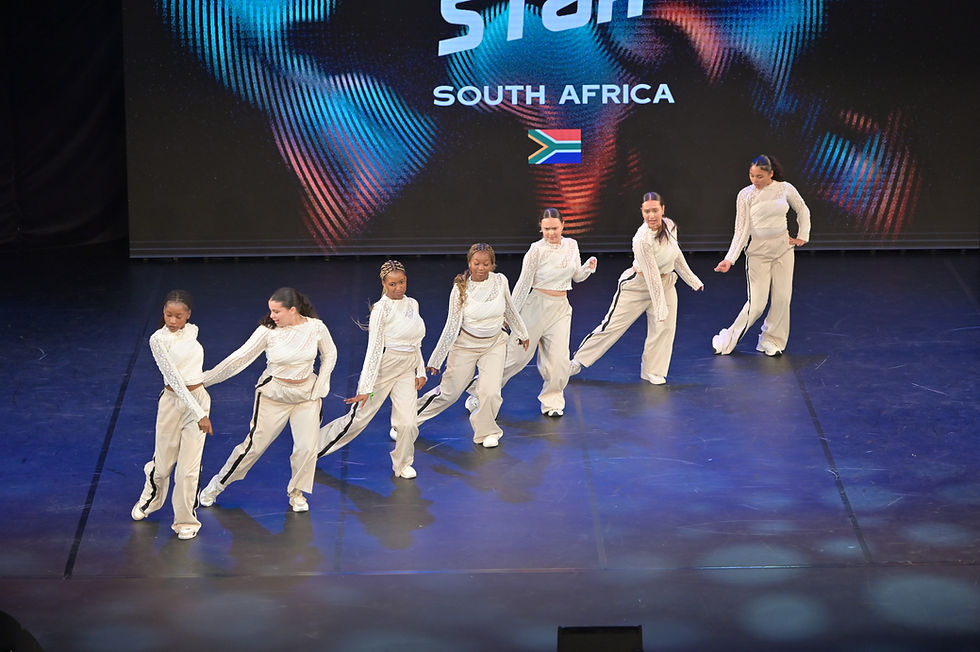
At Dance Culture Studios, we want dancers to achieve their ambitions. We want them to compete, perform, win, qualify for teams and experience the excitement of representing themselves and their country on international stages.
But we also want them to develop the skills, knowledge and character that make those achievements possible and meaningful.
That is why we look at more than competition results. We consider technical proficiency, artistic development, musicality, movement quality, performance ability, responsiveness to feedback and progress against individual development needs. We use classes, examinations, competition analysis and more detailed assessment reports to build a clearer picture of where dancers are and what they need to work on next.
No assessment framework can capture every dimension of a dancer’s growth. Dance is an art form, and artistic expression will always involve subjective interpretation. But that does not mean we should abandon careful assessment. It means we should use it intelligently, recognising both what can be measured and what requires professional judgement.
A trophy tells us that a dancer achieved a particular result. A well-designed development process helps us understand what lies behind that result, what has changed along the way and what the dancer might be capable of achieving next.
Ultimately, we want our dancers to reach a point where they can express themselves with confidence, technical proficiency and authenticity, according to the standards they set for themselves and the demands of the art form they love.
Because the real measure of progress is not simply how many times a dancer stands on a podium.
It is how much they have learned, how far they have developed, how they respond when things become difficult and what they are now able to do that they could not do before.
And perhaps most importantly, it is whether they are becoming the kind of dancer who can continue learning, creating and growing long after the next competition has ended.
At Dance Culture Studios, competition is part of the journey. Development is the bigger picture.




Comments