
From the Studio to the International Stage: How Dance Culture Prepares Dancers for Competitions

For many parents, the most visible part of a dancer’s journey is the competition itself. They see the costumes, the choreography, the performances, the results and, hopefully, the celebrations that follow.
What they do not always see is everything that happens before the dancers walk onto the stage.
There are decisions about which competitions to enter, which dancers are ready, what the judging criteria require, how choreography is developed, how teams are selected, and how much time, effort and preparation go into producing a performance that lasts only a few minutes.
At Dance Culture Studios, we see competitions as an important part of a dancer’s development, but we are selective about the opportunities we pursue. Not every competition offers the same experience, serves the same purpose or provides the same developmental value.
Our approach is to look beyond the next competition and consider the bigger picture. Where are our dancers now? What do they need to develop? What opportunities will challenge them appropriately? And how do we prepare them to perform at their best, whether that is on a local stage or an international one?
Competition is not the destination. It is one of the platforms through which we measure progress, develop confidence, test our standards and prepare dancers for greater opportunities.
1. Understanding the Different Types of Dance Competitions
Before discussing how we prepare dancers for competitions, it is useful to understand that not all dance events are the same.
There are different types of platforms, each with its own format, expectations, judging approach and purpose. Some are designed primarily to encourage participation and development, while others are structured to identify the highest-performing dancers and teams.
Understanding the differences helps parents appreciate why a studio might choose one event over another.
Eisteddfods: Development, Adjudication and Stage Experience
An eisteddfod is generally a structured performing arts event in which participants enter different sections and are assessed by adjudicators.
Dance eisteddfods commonly include solos, duos, trios and group performances across a variety of styles. These may include classical ballet, jazz, contemporary, lyrical, tap, hip-hop, African dance and song and dance, among others.
Performances are typically assessed by experienced adjudicators who provide feedback, critiques or written comments. Participants may receive awards or ratings according to an established standard, rather than simply being ranked against everyone else.
For example, an eisteddfod might use distinctions such as Bronze, Silver, Gold or Diploma, with particular percentage thresholds determining the award.
This creates a more developmental environment. A dancer can receive recognition for achieving a particular standard without necessarily having to defeat every other participant in the section.
In South Africa, the National Eisteddfod Academy, established in 1997, is an example of an organisation operating within this tradition. Its model provides opportunities for participants to enrol in different sections, receive adjudication and progress through achievement levels. Higher-level recognition can also provide access to further performance and award opportunities.
For developing dancers, eisteddfods can be particularly valuable. They offer stage experience, exposure to adjudication, constructive feedback and an opportunity to understand where a dancer’s current standard sits.
They can also provide a more supportive introduction to performing in front of an audience and being assessed by someone other than their regular teacher.
At Dance Culture Studios, we see considerable value in this type of platform, particularly for dancers who are still building confidence and experience.
Sometimes the achievement is simply having the courage to get onto the stage, perform independently and receive feedback. That experience matters.
Dance Festivals: Celebrating the Art Form
A dance festival is generally broader in its purpose.
It may include performances by dance companies, studios and individual dancers, workshops, masterclasses, cultural showcases, community performances and opportunities for social dancing.
Some festivals include competitions, while others are focused primarily on celebrating dance, culture and artistic expression.
They can range from large, highly competitive international events to community-based gatherings that encourage participation and cultural exchange.
The Blackpool Dance Festival, for example, is internationally recognised within ballroom and dancesport. Other festivals place greater emphasis on contemporary dance, cultural traditions, artistic exploration or public participation.
For dancers, festivals can offer something different from a conventional competition. They provide opportunities to experience dance beyond the immediate environment of their own studio, observe other performers, attend workshops and engage with a wider dance community.
The atmosphere can also be different. Rather than focusing exclusively on winning, festivals can celebrate the diversity, creativity and shared experience of dance.
Dance Championships: Competing for Titles and Recognition
A championship has a more explicitly competitive purpose.
The objective is generally to identify the highest-performing participants or teams within particular categories and award titles or placements.
These might include first, second and third place, overall champions, age-group winners, style champions or other forms of recognition.
Judging criteria may include technique, musicality, choreography, performance quality, synchronisation, presentation and other requirements relevant to the competition.
Championships can operate at local, regional, national and international levels. Some form part of a progression system in which dancers qualify through earlier events to compete at higher levels.
The format varies considerably. Some championships are based on multiple dances or specific disciplines, while others focus on choreographed performances, crews, solos, battles or overall titles.
The important distinction is that the result is generally comparative. Dancers are being assessed in relation to the other participants, and the competition aims to establish a winner.
That creates a different environment and often requires a different level of preparation.
Competition Organisations and Platforms
Behind these events are the organisations and platforms that make them possible.
Some are associations or non-profit organisations, while others are commercial competition brands. They may operate a single annual event or run a series of regional competitions that feed into national and international championships.
Examples include the National Eisteddfod Academy in South Africa, Star Dance Alliance and DanceOne in the United States, A.S.D.U. International and various eisteddfod organisations in Australia.
There are also organisations and emerging platforms that focus on particular dance disciplines, competition formats or international networks.
For a studio, understanding who is organising an event and what they offer is just as important as knowing the event’s name.
The organiser determines the structure, rules, divisions, judging criteria, quality of the experience and, in many instances, the opportunities that follow.
Why the distinction matters
These different platforms serve different purposes.
An eisteddfod can help a developing dancer receive feedback and gain confidence. A festival can expose dancers to new experiences, people and artistic influences. A championship can challenge dancers to perform against others and compete for titles.
None is automatically more valuable than the others. Their value depends on what the dancer needs at that particular stage of development.
The important thing is choosing the right platform for the right purpose.
2. Choosing Competitions That Serve the Dancers
With so many competitions available, it would be easy to enter everything.
There are street dance battles, solos, 2v2 competitions, crew battles, choreography competitions, freestyle sections, eisteddfods, festivals, national championships and international events. In commercial dance, opportunities range from individual performances to large formation teams.
Some competitions focus on foundational skills, while others expect advanced choreography and performance ability. Some are designed for developing dancers, while others are intended for experienced competitors.
The challenge is not finding competitions. It is deciding which ones are worth doing.
At Dance Culture Studios, we have dancers of different ages, abilities, experience levels and developmental needs. What is appropriate for one dancer might not be appropriate for another.
We therefore have to be specific about the platforms we choose and the outcomes we want to achieve.
We cannot do everything
There is a point at which entering competition after competition becomes counterproductive.
If dancers spend the entire year preparing for one event after another, they can end up spending more time rehearsing performances than actually developing their craft.
Competitions should be used to measure progress, test what has been learnt and provide a goal to work towards. They should not become the entire training programme.
We prefer to take a broader view.
We look at the longer-term development of our dancers and consider how each opportunity contributes to that journey. Some competitions become regular fixtures on our calendar because they provide consistent value. Others rotate as we explore different platforms and opportunities.
As dancers progress, their needs change. A young dancer who is still developing confidence requires different experiences from an advanced dancer preparing for an international championship.
The platform needs to evolve with the dancer.
What makes a competition worthwhile?
When we assess a competition, we look at more than its reputation or the number of participants.
We consider the experience it provides and whether it offers something meaningful to the dancers.
Some of the questions we ask include:
Is there meaningful feedback from the adjudicators or judges?
Is the standard of competition appropriate for the dancers we intend to enter?
Is the stage experience worthwhile?
Is there an opportunity to qualify for an international event or progress to another level?
Is the stage large enough to accommodate the performances properly?
Is the sound and music quality suitable?
Are there interesting additional sections, such as improvisation, freestyle or foundational dance challenges?
Does the event offer quality photographs, videos or other media that dancers and families can keep?
Is the production quality good, including lighting, staging, banners and LED screens where applicable?
Is the event organised properly, with clear communication, realistic scheduling and respect for participants’ time?
What kind of environment does the event create, and who is participating?
These details matter.
A competition can have impressive branding, a beautiful website and a strong marketing campaign, but that does not automatically mean the experience will be good.
Equally, a competition might have an outdated website or relatively modest branding but provide an exceptional experience for dancers.
Ideally, you want a balance. But ultimately, the quality of the opportunity and its value to the dancers must come first.
We are creating experiences, not just entering competitions
There is another consideration that is sometimes overlooked.
When families invest time and money into dance, the competition experience should offer something beyond simply walking onto a stage and receiving a result.
We are creating memories and providing experiences that can stay with young people for years.
If dancers spend months training, rehearsing and preparing, then the opportunity to perform should feel worthwhile. It should expose them to something different, give them a sense of occasion and allow them to enjoy the experience of being part of the wider dance community.
You have to celebrate and romanticise your life a little.
Otherwise, we might as well spend all our time dancing in a studio, classroom or school hall.
The preparation is important, but so is the experience itself. The stage, the atmosphere, the people, the production, the travel and the opportunity to share something you have worked hard to create all contribute to the value of competing.
Ultimately, our decisions come back to one question: What is best for the development of the dancers?
3. Local, National and International Competitions: Understanding the Journey
The words local, national and international are often used as if they automatically describe a particular standard of dance. They do not necessarily do so.
A local competition can be exceptionally well organised and attract outstanding dancers. An international competition can have a wide range of abilities and standards.
The location of an event and the quality of the competition are two different things.
However, each level can offer a different developmental experience.
Local competitions: Building confidence and experience
For many dancers, local competitions provide their first opportunity to perform outside their regular studio environment.
The stage might be relatively modest, the event might be small and the other participants might be at similar stages of development.
That is perfectly fine.
The objective at this stage is often to gain experience, develop confidence and become comfortable with the process of preparing for and participating in a competition.
Dancers begin to understand how to manage their nerves, remember choreography under pressure, work with costumes and stage arrangements, respond to instructions and perform in front of an unfamiliar audience.
They also start to see how their training compares with that of dancers from other studios.
This is valuable information.
You begin to understand what you do well, where you need to improve and what is possible when you see other dancers performing.
The goal is not necessarily to win. It is to build the experience and confidence needed to progress.
National competitions: Measuring yourself against a wider standard
National competitions introduce a different level of challenge.
You may need to travel to another part of the country, compete against dancers you have never encountered and prepare for a much broader field of participants.
The standard may be higher, the expectations more demanding and the pressure greater.
For studios with international ambitions, national competitions can also provide a qualification pathway to represent the country abroad.
That changes the preparation process.
You need to understand the qualification criteria, the standard required, the costs involved and the practical implications of travelling internationally.
It is not enough to be excited about the possibility of going overseas. You need to understand what you are qualifying for and what will be expected of you when you get there.
National competitions therefore become an important measuring point. They help establish where your dancers stand within the broader national environment and whether they are ready for the next challenge.
International competitions: Exposure, perspective and opportunity
International competition is a significant investment.
There are travel costs, accommodation, entry fees, meals, transport and time away from home. Families and studios need to plan carefully.
We do not believe in travelling internationally simply for the sake of saying that we have competed overseas.
An international trip should have a purpose.
Sometimes that purpose is exposure. Dancers need to see what is happening elsewhere in the world, experience different standards, observe other approaches to dance and understand what is possible.
That experience can be transformative.
A dancer might arrive believing that they are already performing at an exceptional level, only to discover a much broader and more demanding international environment. That can be challenging, but it can also be exactly what they need.
It can light a fire in them.
They begin to understand the difference between what they thought was possible and what is actually being achieved by dancers elsewhere.
The comparison changes their perspective. It can influence their attitude towards training, their ambitions and the effort they are prepared to invest in their development.
For us, local and national opportunities should help prepare dancers for the standards they may encounter internationally.
That does not mean every dancer must travel overseas or that international competition is the only measure of success. It means that we should understand the wider environment and use it to inform our training and aspirations.
4. How We Identify and Select Competition Opportunities
Finding good competitions requires ongoing research.
The dance industry is constantly changing. New events appear, existing organisers introduce new divisions, international platforms develop and competition formats evolve.
You cannot simply rely on the competitions you attended ten years ago and assume that they remain the best options today.
We spend time looking at what is available, following organisers, monitoring announcements, researching platforms and speaking to people who have experience with different events.
Sometimes opportunities are widely advertised. Other times, you have to find them yourself.
We also pay attention to what people are saying about their experiences.
A competition might have excellent marketing but limited information about what it actually offers. Another might have a relatively small public profile but a strong track record within the dance community.
The important thing is to look beneath the surface.
Understanding what an organiser actually offers
When considering a new competition, we want to understand its purpose and its differentiating factors.
What makes it different? What does it offer that our dancers cannot get elsewhere? Does it have a clear structure? Are the rules and divisions communicated properly? Does it have an experienced judging panel? Is there a meaningful opportunity for development?
We also look at how effectively the event is implemented.
A good idea is only the beginning. The organisers need to deliver on that idea through proper planning, communication, production and execution.
The dancers and families should know what to expect, when they need to arrive, how the event will run and what they are working towards.
A positive experience is not created by branding alone. It is created by the quality of the organisation and the care taken with the participants.
Over time, a competition that consistently delivers a worthwhile experience earns a place in a studio’s programme.
That is how a platform becomes a permanent fixture rather than a once-off experiment.
5. How Dancers Are Assessed for Crew Placement and Competition Readiness
One of the responsibilities of a dance studio is understanding its dancers.
We need to recognise their current abilities, identify their potential and determine what kind of opportunities will help them progress.
Experience teaches you to see things that are not always immediately obvious.
You can often identify whether a dancer has previous training, a natural aptitude for movement, an ability to learn quickly or an instinctive understanding of music.
But talent is only one part of the assessment.
Attitude, communication and team contribution matter
We also observe how dancers approach learning.
Do they listen? Do they communicate well? How do they respond to feedback? Are they willing to try something unfamiliar? How do they interact with the other dancers? Do they contribute positively to the group?
These things matter because a crew is more than a collection of talented individuals.
A team needs people who can work together, support one another and contribute to a shared objective.
Some dancers bring natural leadership. Others are particularly strong technically or have exceptional musicality. Some might be quieter but are incredibly consistent and reliable.
The aim is to find the right combination of people and create an environment in which everybody can contribute.
You cannot force the wrong fit and expect it to work indefinitely.
We believe in consciously cultivating the environment around our dancers. That means setting expectations, establishing values and creating a culture in which people understand what is required of them.
It is one of the reasons our larger teams can make such an impact. When the environment is right and the dancers understand the collective objective, individual strengths can contribute to something much bigger.
Competition criteria also influence selection
When selecting dancers for smaller teams, duos, trios and groups, the considerations become more specific.
We have to look at the competition’s eligibility criteria, including age divisions, experience levels, styles and any restrictions on who can participate.
We also consider the demands of the choreography and the particular qualities needed for that performance.
A dancer who is excellent in one style might not necessarily be the right fit for every piece of choreography. That does not diminish their ability. It simply means that different performances require different combinations of skills.
Everybody should have an opportunity to compete
We want all our dancers to experience competition at some point in their development.
That does not mean everybody must compete immediately or enter the same events.
For some dancers, the opportunity might come quite soon. For others, the timeline might be further into the future. We assess what is appropriate and work towards it.
Potential is important, but so is the willingness to put in the work.
If a dancer is prepared to commit to the training, develop the necessary skills and align with the standards we are working towards, we can build a pathway.
Our responsibility is to provide the environment, guidance and opportunities. The dancer’s responsibility is to engage with the process.
The right attitude is imperative.
6. Developing the Performance: Choreography, Synchronisation, Musicality and Stage Presence
A competition performance might last three minutes, but those three minutes can represent months of work.
Creating a strong performance involves much more than putting together an exciting piece of choreography.
We need to develop the dancers’ ability to execute the movements, work together, interpret the music, maintain their energy and communicate with an audience.
These elements take time.
Choreography must be developed around the dancers
As choreographers, we often have a vision of what we want a performance to look like.
We might imagine a particular formation, a movement sequence, a transition or a moment that creates a powerful visual impact.
But there is an important difference between choreographing for professional performers and choreographing for a dance school or academy.
Professional dancers may have years of training and the physical ability to execute highly demanding material. Young dancers are still developing. They have different strengths, limitations and levels of experience.
A choreographer working with young dancers must understand those differences.
The objective is to make the dancers look exceptional while still working within what their bodies and current levels of development can reasonably achieve.
Sometimes that means adapting the choreography.
You might have to change a movement, simplify a transition, adjust a formation or create a different visual effect that plays to the strengths of the dancers.
That is not compromising the artistic vision. It is understanding how to achieve the best possible result with the performers you have.
This requires experience, preparation, foresight, creativity and an understanding of how young dancers develop.
Synchronisation is built through detail
One of the most time-consuming aspects of preparing a group performance is synchronisation.
It is easy to say that everybody must move together. It is much harder to achieve it.
When we clean choreography, we often break the work down into very small sections. We might spend an entire training session refining ten or thirty seconds of movement.
That might sound excessive, but the detail matters.
We need to establish exactly what each dancer is doing:
What is the arm doing?
Where does the leg move?
What is the body doing?
Which direction is the dancer facing?
Where are they looking?
What expression should they communicate?
When does the movement start and finish?
What is the quality or dynamic of the movement?
How does it relate to the music?
These details need to be understood, not simply demonstrated.
Dancers need opportunities to ask questions, receive explanations and understand the intention behind the movement.
Then comes repetition.
We practise the section until the dancers begin to execute it with greater consistency and without having to consciously think through every individual instruction.
This is how cohesion develops.
And yes, sometimes you have to be ruthless about the detail.
If one dancer is out of sync, it can affect the entire picture. If the dancer drawing the audience’s focus is not performing at the required standard, it can weaken the impact of the whole team.
That does not mean that a dancer should be criticised without support. It means the standard must be clear, and the work needed to achieve it must be done.
Musicality gives the performance character
Synchronisation is not simply about moving at the same time.
The dancers must also understand the music and execute the choreography with the intended timing, accents and dynamics.
A group can be perfectly organised but still lack musical character if the dancers do not understand how the movement relates to the music.
We therefore work on the detail of the musical interpretation, including changes in tempo, accents, pauses, energy and texture.
The choreography might require a sharp, explosive movement in one section and a controlled, fluid quality in another.
Those differences need to be understood and practised.
Stamina and stage presence require experience
Physical stamina is another important consideration.
A dancer might be able to perform a sequence beautifully in the first rehearsal but struggle to maintain the same quality towards the end of a demanding routine.
Conditioning, fitness, cross-training and appropriate physical preparation all contribute to performance quality.
But there is another kind of stamina that comes from stage experience.
Dancers need to become comfortable performing in different environments, under different conditions and in front of different audiences.
Stage presence develops through practice. It involves confidence, awareness, expression, projection and the ability to communicate with an audience.
You cannot expect a dancer to develop all of these qualities simply by standing in a studio and repeating choreography.
They need opportunities to perform.
The more experience they gain, the better equipped they become to manage the demands of the stage.
7. The Rehearsal Process: Repetition, Feedback and Preparation
There is a funny imbalance in the performing arts.
You can spend hours, days, weeks or even months preparing a performance that lasts only a few minutes.
Musicians do something similar. An artist might spend months or even years developing an album or a particular song, only for the audience to experience the finished work in a relatively short period.
That is the nature of creating something.
The rehearsal process involves constant adjustment. You try something, assess it, make changes, repeat it and sometimes change direction entirely.
Occasionally, you might even decide that something is not working and start again.
That is part of the process.
Balancing repetition with inspiration
The difficult part is finding the balance between doing the necessary repetitive work and keeping dancers motivated and inspired.
Some rehearsals are exciting. You discover a new movement, create a formation or see a piece of choreography come together.
Other rehearsals involve doing the same eight counts repeatedly until everybody finally understands the detail.
Both are necessary.
At Dance Culture Studios, we structure our classes and training to recognise that dancers need both physical development and creative engagement. They need to enjoy what they are doing, but they also need to understand that achieving a high standard requires discipline and repetition.
This is particularly important when working with groups of dancers at different stages of development.
The teaching team must understand how to manage those differences while still maintaining the standard expected of the performance.
Feedback is constant, but implementation is what matters
Feedback can come from many places.
It can come directly from a coach during class, through written assessments, from examinations, from judges at competitions or from observing the performance afterwards.
We are constantly receiving information about what is working and what needs improvement.
But feedback is only valuable when it is used.
You can receive a detailed adjudication report, file it away and never look at it again. You can listen to a coach explain what needs to change and then continue practising in exactly the same way.
Neither approach will produce much improvement.
The important part is taking the information, understanding it and applying it.
That is why we set aside time to work on feedback and make the necessary adjustments.
Preparation goes beyond the choreography
A competition requires more than learning the routine.
Dancers need to be physically prepared, mentally focused and aware of what is expected of them.
Preparation includes:
Understanding the competition’s rules and judging criteria.
Knowing the intended outcome of the performance.
Being physically conditioned for the demands of the routine.
Having appropriate costumes, footwear and presentation.
Understanding the schedule and logistical arrangements.
Maintaining suitable nutrition, hydration and rest.
Knowing how to warm up and prepare before performing.
Communicating effectively with the rest of the team.
Developing the emotional and psychological readiness to perform under pressure.
There is a difference between knowing the choreography and being ready to compete.
We want our dancers to understand that difference.
8. Understanding Competition Rules and Judging Criteria
Competition rules are important because they provide structure, clarity and a common standard against which participants can be assessed.
But rules only serve their purpose when they are clearly communicated and consistently implemented.
One of the challenges in the competition environment is when organisers publish rules and regulations but do not apply them consistently. This creates confusion, frustration and, understandably, dissatisfaction.
For a studio, understanding the rules is essential because they directly influence the training and preparation process.
The judging criteria determine the focus
Every competition has its own priorities.
One might place greater emphasis on choreography, another on synchronisation, and another on technique, musicality or performance quality.
The weighting of the judging criteria matters.
If synchronisation carries a higher weighting, then we need to understand what the judges are looking for and ensure that our training reflects that priority.
If a competition places particular importance on foundational movement, then we need to make sure the dancers are prepared accordingly.
This does not mean abandoning our own teaching principles. It means understanding the environment in which we are competing and preparing intelligently.
The rules can influence choreography
There are practical requirements that can affect the entire creative process.
For example:
How long is the performance allowed to be?
Are there restrictions on music or language?
Are props permitted?
Are lifts, tricks or acrobatic movements allowed?
Are there particular style or repertoire requirements?
Are there restrictions on the number of dancers?
Which age and experience divisions are available?
How are beginner, intermediate and advanced levels defined?
Are improvisation or freestyle sections included?
Are there restrictions on choreography or movement content?
These are not small details.
If the performance exceeds the permitted time, there may be a penalty. If a competition requires a particular style or repertoire, a piece that does not meet those requirements might be unsuitable. If props are not allowed, the choreographer needs to know that before developing the concept.
The same applies to divisions.
One organisation’s definition of a beginner might differ from another’s. If the criteria are vague, inconsistently applied or poorly communicated, studios may find themselves preparing for a category that does not reflect the intended standard.
Coaches need to be analysts as well as teachers
A coach must understand the rules, analyse the judging criteria and translate that information into a practical training plan.
We need to know what we are being assessed on, what the competition expects and how to prepare our dancers accordingly.
We also need to evaluate the results afterwards.
Were the rules applied fairly? Was the judging consistent? Did the feedback reflect the published criteria? Were there areas where our dancers could have performed better?
These are questions that should be considered honestly.
There must be integrity in the process. Families invest considerable time and money in competitions, and they deserve to know that their dancers are participating in an environment where fairness, transparency and professionalism matter.
There should be no place for deliberate bias or favouritism. Disagreements may arise, and not everybody will always be satisfied with a result, but concerns should be handled respectfully and transparently.
Standards must be communicated and maintained
There is also a responsibility within the studio.
A coach must establish the standard, communicate it clearly and ensure that the teaching and choreographic teams are aligned.
Dancers need to understand the expectations. Teachers need to understand the vision. Parents need to understand what the commitment involves.
A standard cannot simply exist in the coach’s head. It must be translated into the daily training environment.
That requires leadership, consistency and accountability.
9. What Dancers and Parents Should Expect from a Competition Season
Every competition season is different.
Dance is constantly evolving, and the opportunities available to dancers change. As a studio, we have to review our direction and consider whether our programme is still serving the needs of our dancers.
There was a time when we might reassess our approach annually. Increasingly, that process happens more frequently, sometimes every six months.
The pace of change in the industry requires us to be responsive.
A competition programme should reflect where the studio is going, not simply repeat what it did last year.
Planning starts before the season begins
A competition season requires planning.
We need to establish which events we intend to enter, which dancers will participate, what choreography needs to be developed, what costumes are required and how much time will be needed for preparation.
There are also financial and logistical considerations.
Families need to plan their calendars, budgets and holidays. The studio needs to coordinate its management, teaching and creative teams. Dancers need to understand the expectations and commitments involved.
Ideally, we are looking ahead two or three seasons rather than making decisions one competition at a time.
At the end of one season, we should already be considering the next. We then consolidate the plan at the beginning of the new season and check in regularly to assess whether we are on track.
That allows us to make adjustments before small issues become bigger problems.
Hard work needs to be balanced with enjoyment
Competition preparation can be demanding.
There are periods when dancers need to focus, work hard and commit to the process. But there should also be time to enjoy dance without the pressure of constantly preparing for another event.
We believe that competition seasons need to be balanced.
There is a time to push, rehearse, refine and perform. There is also a time to explore, experiment, enjoy movement and simply be dancers.
If every class, every rehearsal and every performance becomes about winning the next competition, something important can be lost.
The purpose is development, and development needs room for creativity, enjoyment and recovery as well.
10. The Financial and Logistical Commitment of Competing
Competition participation involves a financial and logistical commitment, and the extent of that commitment depends on the choices a family makes.
A dancer might enter two sections at an event or ten. A studio might choose two competitions in a season or participate in many more.
There is no single formula that works for every family or every dancer.
Some families can afford to travel regularly and participate in multiple events. Others need to be more selective. We have to be understanding of those differences.
The costs can include entry fees, costumes, transport, accommodation, meals and other expenses associated with participating.
There is also the time commitment: rehearsals, travel, preparation and time away from other activities.
For international events, those considerations become even more significant.
Our philosophy: Go deeper, not wider
At Dance Culture Studios, we believe in going deeper rather than wider.
We would generally rather enter fewer competitions and fewer sections, and prepare those performances properly, than spread our dancers across too many events.
There is a trade-off.
Entering more events can create additional opportunities and, commercially, can generate more income for a studio. But that should not automatically determine the programme.
We have to ask whether the additional competition is genuinely beneficial.
Is it helping dancers develop? Does it contribute to our objectives? Does it offer something different? Is the time and financial investment justified?
If the answer is no, then we need to question why we are doing it.
Planning for the whole studio
A parent naturally focuses on their own child. They consider what opportunities are available, what they can afford and what they would like their child to experience.
A studio has to consider a much broader picture.
We might be coordinating dozens of dancers, multiple teams, different age groups, several teachers and a range of family circumstances.
We have to balance individual aspirations with the practical realities of running a collective programme.
Compromise is sometimes necessary, but it should not come at the expense of the studio’s developmental objectives or the quality of the experience.
The aim is to create a programme that is ambitious, realistic and sustainable.
11. Evaluating Results and Using Feedback to Improve
When a competition is over, the work is not finished.
We need to evaluate what happened, consider the results and decide what we can learn from the experience.
At Dance Culture Studios, we have our own standards and objectives. We assess our performances against those objectives, but we also recognise that we cannot operate in isolation.
External feedback matters.
We need to listen to judges, parents, dancers, organisers and other people who have meaningful insight into the experience.
But not all feedback carries the same weight.
Sometimes people offer comments without having fully considered the situation. At other times, someone provides a particularly useful observation that identifies something we had not noticed ourselves.
We need to be able to distinguish between the two.
Look for patterns, not just individual comments
If the same feedback appears repeatedly across different competitions, judges or performances, it deserves attention.
Perhaps synchronisation is consistently identified as an area for improvement. Perhaps dancers are struggling with musicality or performance quality. Perhaps our choreography is strong, but the execution is not yet at the level we want.
These patterns can help us identify where our training needs to change.
We then look at our lesson plans, class structures and rehearsal processes to determine whether something needs to be adjusted.
Sometimes the answer is to introduce new exercises or dedicate more time to a particular skill.
At other times, the teaching approach is already correct, but the dancers need to implement it more consistently.
There is a difference between not knowing what to do and knowing what to do but not doing it.
We must be honest about that distinction.
The studio provides the environment, but dancers must take responsibility
We work hard to create an environment in which dancers want to improve.
We establish expectations, provide guidance, offer opportunities and create a culture in which striving for excellence is part of the experience.
But there is a limit to what a coach or studio can do on behalf of an individual dancer.
We can teach, demonstrate, explain, correct and provide feedback. We can create the conditions for improvement.
The dancer must still take responsibility for their own development.
They need to listen, practise, make adjustments and apply what they have learnt.
That is how feedback becomes progress.
It is also how we continue improving as a studio. We evaluate our own work, listen to external perspectives, identify what needs attention and make the necessary changes.
The process never really ends.
12. Participating, Qualifying and Winning Internationally Are Three Different Things
One of the most important distinctions parents and dancers need to understand is that participating in an international event, qualifying to attend one and winning at one are three different achievements.
They should not be treated as interchangeable.
Participating: Exposure and experience
Sometimes the objective of travelling internationally is simply to participate.
A dancer might be at a stage of development where the greatest benefit is exposure to the international environment.
They get to see what other dancers are doing, experience different standards, observe new approaches and understand what is possible beyond their local environment.
There may be no expectation of reaching a final or winning a medal.
The objective is to learn.
They might attend workshops, participate in dance camps, watch other performances and spend time with dancers from different countries.
That experience becomes part of their development.
When they return home, they can share what they have learnt with dancers who did not travel. The knowledge and inspiration can influence the wider studio.
Sometimes the most valuable result of an international trip is what happens in the training room when everybody gets home.
Qualifying: Earning the opportunity to represent your country
Qualifying for an international event is an achievement in its own right.
It generally means that the dancer or team has met the requirements of the national qualification process and earned the opportunity to represent their country at a particular event.
That is significant.
However, qualifying does not automatically mean that the dancer is already performing at the same standard as the strongest international competitors.
It means they have earned the opportunity to compete.
The international event is where they encounter the wider field and discover how their performance compares.
That distinction is important because it allows us to set realistic expectations.
We can celebrate the qualification while still recognising that there is more work to do.
Winning: Competing successfully at the international level
Winning internationally is another challenge entirely.
As dancers develop, our objectives can become progressively more ambitious.
Perhaps the first goal is to participate and gain exposure. The next time, we might aim to reach a final. After that, we might work towards a podium position or a gold medal.
Eventually, we may want to achieve those results consistently.
We might also decide to explore different disciplines or competition formats. A team that has developed a strong reputation in choreography might want to challenge itself in freestyle, battles or another area of dance.
The important thing is that we continue developing without losing sight of what we already do well.
The difference is often mindset and preparation
Having competed internationally myself, watched international competitions and coached teams travelling overseas, I have learnt a great deal about what separates different levels of performance.
Technical ability is important, but mindset and attitude make a significant difference.
When you are competing at a high level, you need to be able to deliver when it matters.
You cannot allow distractions to take over. You need emotional maturity, psychological preparation and the ability to manage pressure.
You need a system.
You need to know how to warm up, prepare your body, focus your mind and get yourself into the right performance state. You need to understand how to manage the time before you compete and how to remain composed when things do not go exactly as planned.
These things are not automatic. They need to be developed.
As a coach, I take that responsibility seriously.
I need to demonstrate the standard I expect from the team. I need to lead actively, communicate clearly and continue improving my own knowledge and abilities.
The dancers need to see that commitment in practice, not just hear about it.
We go to competitions, learn from the experience, return to the drawing board and improve.
We do not simply accept a result and move on as though nothing happened.
Winning is not always about coming first
I often say that winning is not necessarily the same as coming first.
Winning means achieving the objectives you set for yourself.
There are occasions when I might be delighted with a performance even if the dancers did not reach the final or secure a podium position. If they gave everything, executed the performance to the best of their ability and achieved the goals we had set, that can be a meaningful success.
Equally, a team might win a competition but deliver a performance that falls short of its own potential.
A medal does not automatically mean that everything was done well.
I want our dancers to understand that distinction.
We should celebrate achievements, but we must also be honest about performance quality, effort, preparation and areas for improvement.
If a dancer has not given their best, a good result should not be used to hide that fact.
And if a dancer has worked exceptionally hard, performed with courage and learnt something valuable, a result that does not include a medal should not erase that achievement.
The goal is always to keep improving.
We should never become so comfortable with a particular result that we stop challenging ourselves.
Preparing Young South Africans for More Than the Dance Stage
There is a bigger reason why we take competition and performance so seriously.
Dance provides an environment in which young people can learn to work towards something meaningful, manage pressure, communicate, collaborate, accept feedback and take responsibility for their development.
These are not skills that disappear when the music stops.
They are skills that can influence how young people approach education, business, leadership, relationships and life.
We want dancers who are curious, analytical, disciplined, hardworking and willing to take calculated risks. We want them to be confident enough to put themselves forward, mature enough to learn from setbacks and ambitious enough to keep pursuing improvement.
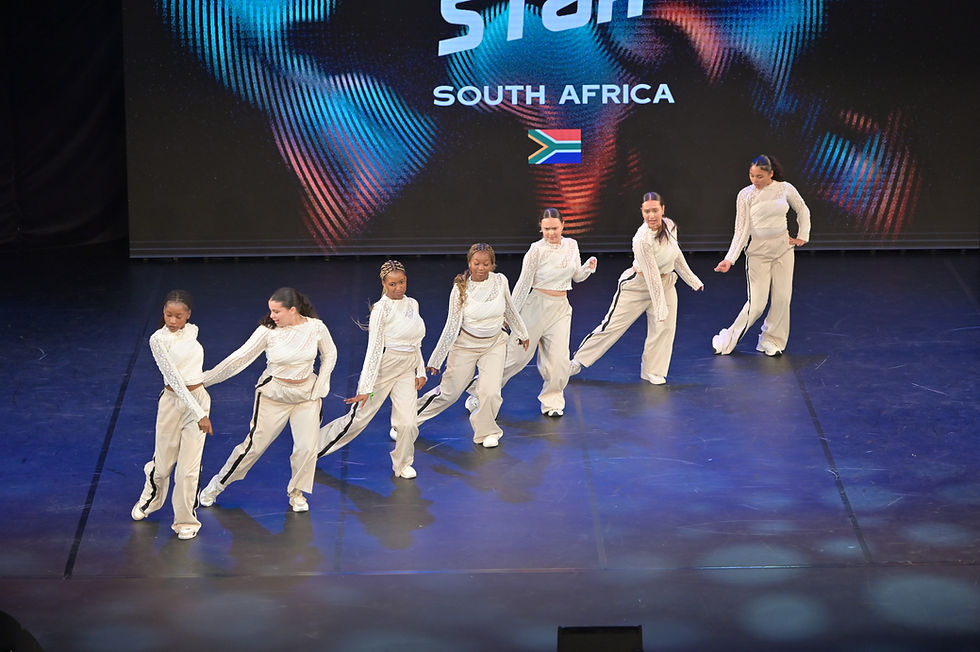
We want them to understand that representing South Africa is an honour and a responsibility.
When our dancers travel internationally, they are not simply going overseas to perform. They are representing their studio, their community and their country.
That should mean something.
We want them to see what is happening around the world, understand the standards being achieved elsewhere and recognise that they have the ability to contribute to those environments.
South Africa has enormous creative potential. We should be developing young people who are prepared to participate on the world stage, not simply observe it from a distance.
That requires ambition, preparation and a willingness to keep learning.
At Dance Culture Studios, our competition programme is one of the ways we work towards that objective.
We do not enter competitions simply to collect trophies. We select opportunities that challenge our dancers, expose them to new experiences and help them measure their development.
We prepare them to perform, but also to think, adapt, communicate and improve.
We celebrate the wins, learn from the losses and take every experience back into the studio.
Because the real work does not happen only when the dancers walk onto the stage.
It happens in the months of preparation, the hours of rehearsal, the difficult conversations, the corrections, the repetition and the commitment to doing better.
The international stage might be where the achievement becomes visible, but the journey that makes it possible begins in the studio.
Thanks for reading,
Quintus


Comments